
I was a teenager the first time I set foot in Andorra. We were driving through the Pyrenees on a family road trip, France to Spain, or Spain to France, I honestly cannot remember which direction. What I do remember is the sign at the border, the sudden shift in atmosphere, the duty-free shops appearing out of nowhere between mountain peaks. And then, almost before I had processed what I was seeing, another border sign. We had driven straight through an entire country.
That is not a metaphor. Andorra is genuinely that small. At 468 square kilometres, it fits inside a single Swiss canton. You can drive its longest road in under an hour. The capital, Andorra la Vella, is the highest capital city in Europe at 1,023 metres above sea level, and yet the entire country only has about 77,000 inhabitants. I remember thinking: how does something this small even function as an independent state?
"Andorra has survived for 750 years between two powerful neighbours by being too useful to either to absorb."
— Regional historian, Pyrenees studies
It functions very well, as it turns out. And decades later, I find myself advising clients who are seriously considering Andorra not as a transit country to speed through, but as a place to live, to do business, and to build tax-efficient structures that are fully compliant with European standards. The little principality in the mountains has reinvented itself, and what it offers in 2026 is genuinely remarkable.
- A Country That Refused to Disappear: History and Context
- Overview: Geography, Economy and Key Facts
- The Tax System: Why Everyone Is Talking About Andorra
- Residency: Active and Passive Options Explained
- Company Formation in Andorra
- Banking: What to Expect
- Advantages and Challenges: The Honest Assessment
- When Andorra Makes Sense, and When It Doesn't
- How 1Stop Connect Helps
A Country That Refused to Disappear: History and Context
Andorra's survival as an independent state is one of Europe's quiet political miracles. Sandwiched between France and Spain, two of the continent's largest powers, it has maintained its sovereignty for over 750 years through a combination of geographic inconvenience and diplomatic shrewdness.
The co-principality was formally established in 1278 under a treaty called the pareatge, which divided feudal authority between the Bishop of Urgell in Spain and the Count of Foix in France. The arrangement meant neither neighbour could fully absorb Andorra without provoking the other. Over the centuries, as France became a republic and the Count of Foix's title passed through various hands, the odd arrangement evolved: today Andorra's two co-princes are the President of France and the Bishop of Urgell. A functioning 21st century democracy with a medieval constitutional arrangement. Only in Europe.
Through both World Wars, Andorra remained neutral, technically, it was never officially included in the peace treaties ending World War I, meaning it remained in a formal state of war with Germany until 1958, though nobody on either side seemed particularly bothered. It joined the United Nations only in 1993, the same year it adopted its first written constitution and transformed from a feudal co-principality into a proper parliamentary democracy.
The economy has gone through clear phases. For centuries, Andorra survived on livestock, iron foundries, and tobacco. Then skiing discovered the Pyrenees, and the whole equation changed. Tourism became the engine. And then something else happened: as neighbouring France and Spain raised taxes dramatically through the 20th century, Andorra's minimal tax regime became a magnet, first for shoppers, then for wealthy residents, and finally for international businesses.
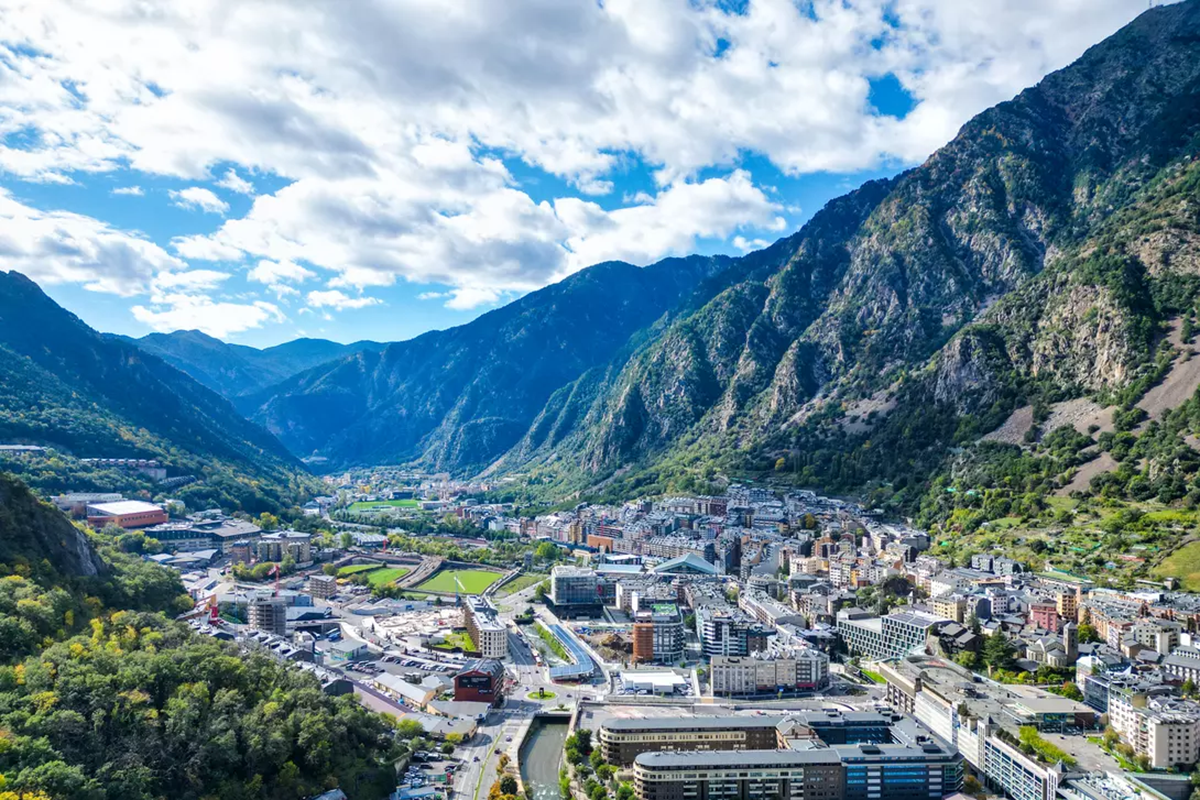
Andorra la Vella, Europe's highest capital, Photo: Wikimedia Commons (CC BY-SA 3.0)
Overview: Geography, Economy and Key Facts
Andorra sits in the eastern Pyrenees at an average altitude of around 1,996 metres. There is no airport, the nearest are Barcelona (approximately 3 hours by road) and Toulouse (approximately 2.5 hours). There is no railway. You get there by car, or occasionally by helicopter. This geographic isolation has paradoxically been one of Andorra's greatest economic assets: it forced the country to create advantages that would make the inconvenience worthwhile.
Key Facts at a Glance
Size: 468 km², smaller than many European cities. The country consists of seven parishes (parròquies): Andorra la Vella, Escaldes-Engordany, Encamp, Canillo, La Massana, Ordino, and Sant Julià de Lòria.
Population: Approximately 77,000 residents, but only about 35% hold Andorran nationality. The rest are expatriates, predominantly Spanish, Portuguese, and French, drawn by the quality of life and tax advantages.
Language: Catalan is the sole official language. Spanish, French, and Portuguese are all widely spoken and understood. English is increasingly common in business contexts.
Currency: The Euro. Andorra is not an EU member but has a monetary agreement with the EU allowing euro use. It also benefits from the EU customs union, meaning goods enter duty-free from EU countries for personal use.
GDP: Approximately $4 billion. Tiny in absolute terms, but the GDP per capita of around $50,000 places Andorra firmly in the world's top 25 by this measure, above most EU member states.
The Three Pillars of the Economy
Tourism dominates, accounting for roughly 80% of GDP. Approximately 8 million visitors arrive annually, more than 100 times the resident population, drawn by the Grandvalira ski resort (the largest in the Pyrenees at 215 km of slopes), summer hiking, and most importantly, duty-free shopping. Electronics, tobacco, alcohol, and luxury goods are all significantly cheaper than in France or Spain.
Banking and finance contribute approximately 19% of GDP. Five main banks operate: Andorra Banc (ANC), Crèdit Andorrà, MoraBanc, Banc Sabadell d'Andorra, and BancSabadell. Historically known for strong banking secrecy, Andorra has progressively aligned with international transparency standards, it signed the OECD Common Reporting Standard and is no longer on any major grey lists.
Real estate has become an increasingly important economic driver, particularly as wealthy foreigners seek residency. Property prices in Andorra la Vella and Escaldes-Engordany are high by Pyrenean standards, though still significantly below Paris, Barcelona, or Geneva. The government introduced a foreign real estate investment tax in 2026 to cool speculative demand.
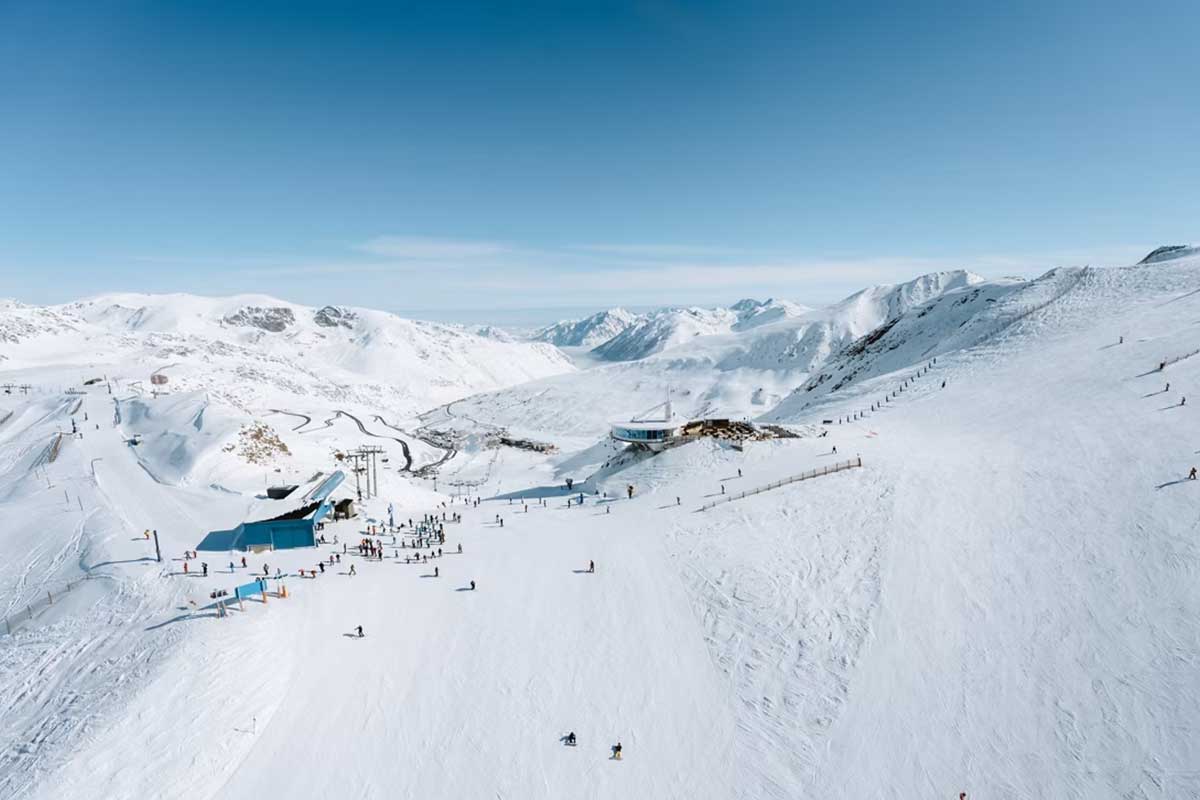
Grandvalira, largest ski resort in the Pyrenees with 215 km of slopes, Photo: Wikimedia Commons (CC BY-SA 3.0)
The Tax System: Why Everyone Is Talking About Andorra
Let me be direct: Andorra's tax system is genuinely one of the most favourable in Europe. Not favourable in the way that jurisdictions with no governance, no infrastructure, and no rule of law are favourable, but favourable in the context of a stable, well-governed European democracy with functioning courts, good healthcare, and excellent infrastructure.
The numbers speak for themselves. Compare a person earning €200,000 per year:
Andorra: First €24,000 tax-free. 5% on €24,001–€40,000. 10% on remainder. Effective rate on €200,000: approximately 8.6%. No wealth tax. No inheritance tax.
Spain: Progressive rates reaching 47%. Wealth tax applies. Inheritance tax varies by region but can be substantial.
France: Progressive income tax reaching 45%. ISF wealth tax abolished in 2018 but IFI (real estate wealth tax) remains. Heavy succession taxes.
Personal Income Tax (IRPF)
Andorra's personal income tax is called the Impost sobre la Renda de les Persones Físiques, or IRPF. The structure is progressive but extremely shallow:
The first €24,000 of annual income is completely exempt, no tax whatsoever. Income between €24,001 and €40,000 is taxed at 5%. Income above €40,000 is taxed at 10%. That is the ceiling. 10%. For everyone. No matter how much you earn above that threshold.
Investment income, interest, foreign dividends, capital gains from financial instruments, falls into what Andorra calls the "savings base." This is also taxed at 10%, but the first €3,000 per year is exempt. Dividends received from Andorran companies that have already paid the 10% corporate tax are fully exempt at the personal level, eliminating double taxation entirely.
Corporate Tax (IS, Impost de Societats)
The standard corporate tax rate is 10% on net profits. This already places Andorra below most European jurisdictions, but the structure has additional layers of relief:
Holding companies that invest exclusively outside Andorra currently benefit from a reduced rate of just 2% on profits. This makes Andorra an extremely efficient holding jurisdiction for international investment structures.
New companies receive a 50% reduction in the first year (effective rate: 5%). For entrepreneurs with annual income below €100,000 in the early years, a rate of 5% applies on the first €50,000 of profits for the first three years.
The "Patent Box" regime allows an effective rate of just 2% for companies exploiting intellectual property, patents, trademarks, software licences, where the IP development occurred in Andorra. This is highly competitive internationally.
There is no withholding tax on dividends or interest paid to non-residents. Royalties carry a 5% withholding rate, which is among the lowest in Europe.
VAT, The Lowest in Europe
Andorra calls its value-added tax the Impost General Indirecte (IGI). The standard rate is 4.5%. For comparison, Spain's standard VAT is 21%, France's is 20%, and the EU average is around 21.5%. This is not a minor difference, it is structural. And it is why Andorrans and tourists alike do their serious shopping here.
Taxes That Do Not Exist
Sometimes what a jurisdiction does not tax is as important as what it does. Andorra has no wealth tax. No inheritance tax on direct family members. No gift tax between family members. No capital gains tax on shares held in companies where you own less than 25%, or on any shares held for more than ten years. No dividend withholding on payments to non-resident shareholders.
The global agreement on a 15% minimum corporate tax rate for large multinationals (BEPS Pillar Two) applies to companies with revenues above €750 million. For the vast majority of businesses using Andorra, this threshold is irrelevant. Small and medium enterprises, holding companies, IP structures, and individual entrepreneurs all fall well below this threshold. Andorra's 10% rate, while below 15%, will continue to apply to the overwhelming majority of its corporate clients.

The famous commercial streets of Andorra la Vella, duty-free shopping drives 8 million visitors annually, Photo: Wikimedia Commons
Residency: Active and Passive Options Explained
This is where Andorra's story gets genuinely interesting for international entrepreneurs, investors, and high-net-worth individuals. The country offers two fundamentally different residency tracks, each serving a different profile of client.
Active Residency — For Those Who Come to Work
Active residency is designed for people who genuinely want to live and work in Andorra. It requires a minimum stay of 183 days per year, making you a full tax resident. In exchange, you pay Andorra's tax rates on your worldwide income.
The self-employed route, the most common for entrepreneurs, requires you to form or acquire at least 34% of an Andorran company, hold a management position within it, and make a €50,000 deposit with the Andorran Financial Authority (AFA). Following the January 2026 legal changes, this deposit is now non-refundable (a fonds perdu), except when the initial application is denied.
The company must be genuinely operational. Authorities verify business activity. You cannot simply form a shell and claim active residency.
Active residency is the right path for digital entrepreneurs, consultants, remote workers, and anyone who wants to base their life and business in Andorra while benefiting fully from the tax regime.
Passive Residency — For Investors and Retirees
Passive residency requires only 90 days per year in Andorra. It is designed for people who have sufficient wealth or income from outside Andorra and do not need to work locally.
The financial requirements were significantly tightened in January 2026. The current minimum investment is €1,000,000 in Andorran assets, real estate, financial instruments, bonds, or company stakes. There is also a non-refundable deposit of €50,000 to the AFA (plus €12,000 per dependent). The investment in the Andorran Housing Fund allows a reduced investment threshold of €400,000.
Passive residents cannot work for Andorran employers, though they may hold administrative positions in Andorran companies receiving passive income. The key is that at least 85% of their income must come from outside Andorra.
There is an important nuance worth flagging: holding a passive residence permit does not automatically make you a tax resident of Andorra. Tax residency requires either spending 183+ days in the country or having Andorra as the genuine centre of your economic interests. Some clients make the mistake of obtaining passive residency while continuing to live primarily elsewhere, their home country tax authority may well continue to claim them as resident. The 90-day rule is an administrative minimum for keeping the permit, not a shortcut to tax residency.
There is a third passive residency category specifically designed for athletes, artists, and scientists of international standing, as well as for entrepreneurs whose company generates at least 85% of its income outside Andorra. This category removes the €600,000 minimum investment requirement. For high-earning remote entrepreneurs and internationally recognised professionals, this can be the most cost-effective entry route.
Residency Summary
Active Residency
- Full tax residency and all associated benefits.
- Lower financial barriers: €50,000 AFA deposit (now non-refundable).
- Right to work, employ staff, and run a business in Andorra.
- Access to CASS (Andorran social security and healthcare).
- Path to citizenship after 20 years of residency.
Passive Residency
- Only 90 days/year required — flexibility to live elsewhere.
- High investment threshold: €1,000,000 minimum (2026 rules).
- Cannot work for Andorran employers.
- Tax residency requires genuinely centring economic life in Andorra.
- Must arrange private health insurance (not covered by CASS).
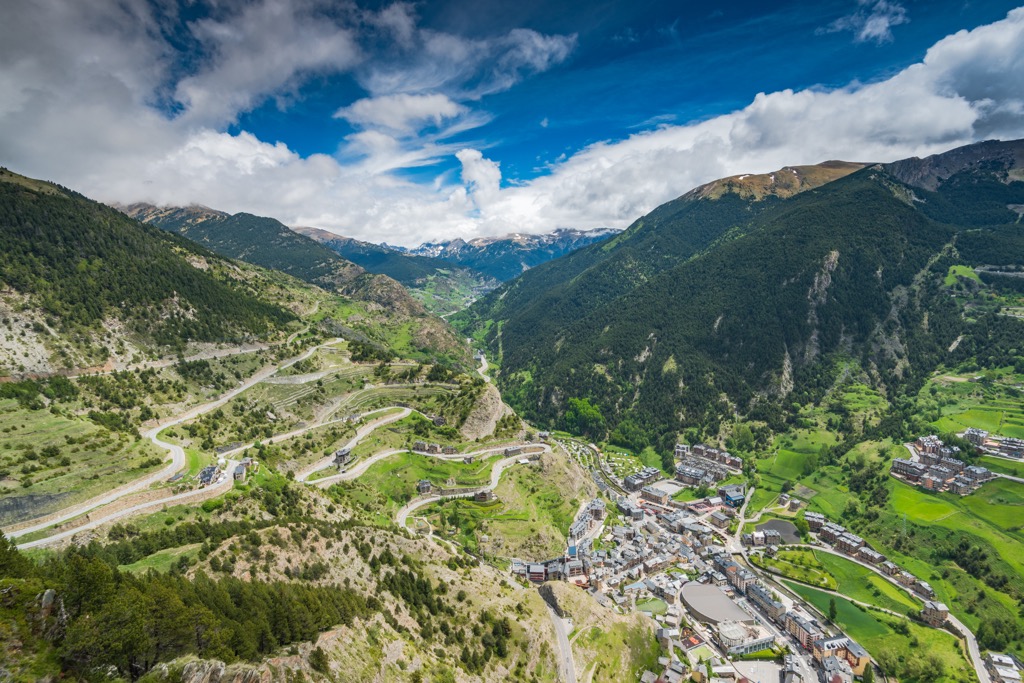
Summer in the Andorran Pyrenees, the country's natural beauty is a major draw for residents, Photo: Wikimedia Commons (CC BY-SA 3.0)
Company Formation in Andorra
Andorra's company law is relatively straightforward compared to many international jurisdictions. The standard vehicle is the Societat de Responsabilitat Limitada (SL) — equivalent to a limited liability company. For larger operations, the Societat Anònima (SA) — equivalent to a joint stock company — is available.
Key Formation Requirements
Minimum share capital: €3,000 for an SL, fully paid up at formation. This is low and accessible.
Foreign Investment Authorization: If foreign ownership exceeds 10%, the investor must obtain a Foreign Investment Authorization from the government before formation. This requires passport, criminal record certificate, and proof of legal origin of funds. The process typically takes 4 to 6 weeks.
Registered office: A physical address in Andorra is mandatory. Virtual offices are accepted for compliance purposes.
Directors: Minimum one director, who need not be an Andorran resident. However, for banking purposes and substantive tax claims, having local management presence is strongly recommended.
Annual accounts: All Andorran companies must file annual accounts with the tax authority. From 2024, individual entrepreneurs with annual income below €150,000 are exempt from this obligation, a significant simplification for small businesses.
Formation Timeline
Expect 4 to 8 weeks from start to finish for a standard SL formation. The process involves name reservation, foreign investment authorization (if applicable), notarised articles of incorporation, registration with the Registre de Societats, and tax registration. Unlike some offshore jurisdictions, shelf companies are not a standard Andorran practice, you form fresh.
Substance Matters
Unlike classic offshore jurisdictions, Andorra genuinely expects companies to have substance. If you form an Andorran company to access the 10% corporate rate, tax authorities, both Andorran and those of your home country, will look at whether the company genuinely operates from Andorra. Real management, real decisions made locally, real employees or at minimum a genuine registered office with proper administration.
This is not a weakness. It is what gives Andorran structures their credibility internationally. A well-structured Andorran SL with proper substance is far more defensible than a shell in a no-tax jurisdiction with zero economic reality.
Banking: What to Expect
Andorra's five main banks — Andorra Banc (ANC), Crèdit Andorrà, MoraBanc, Banca Sabadell d'Andorra, and Andbanc, are fully compliant with OECD standards, participate in the Common Reporting Standard, and comply with FATCA for US persons.
The era of Andorran banking secrecy is over. What replaced it is a well-regulated banking system that is stable, professional, and aligned with European norms.
Account Opening Reality
Opening a bank account as a resident is generally straightforward provided you have your residency documentation in order. For non-residents, or for corporate accounts, the process requires more preparation.
What banks require: Certified passport copies. Proof of address (both Andorran and original country). Source of funds explanation. Source of wealth declaration for substantial deposits. Business plan or description of activities for corporate accounts. Criminal record certificate in some cases.
A personal visit is expected. Unlike some fintech-oriented jurisdictions, Andorran banks traditionally want to meet you. This reflects their compliance culture rather than a barrier, it actually helps the process go smoothly when you come prepared.
Andorran banks offer multi-currency accounts (EUR, USD, GBP, CHF), private banking services, and investment management. For high-net-worth individuals and families, the private banking infrastructure is genuinely competitive with Swiss or Luxembourg offerings.
Andorran banks are generally more receptive to clients who have already established residency or are actively in the process. If you arrive as a pure non-resident seeking a corporate account with no residential ties to Andorra, expect more due diligence and a longer process. Establish your residency first, then open accounts. The sequence matters.
Advantages and Challenges: The Honest Assessment
Advantages
- 10% maximum personal income tax — some of the lowest in Europe.
- 4.5% VAT, the lowest in Europe. No wealth tax, no inheritance tax.
- Corporate tax at 10%, with 2% for holding companies and IP structures.
- Stable, well-governed European democracy with rule of law and independent courts.
- OECD-compliant and internationally reputable — no grey list stigma.
- Excellent quality of life: safety, healthcare, education, natural environment.
- Euro currency, customs union access, de facto access to EU single market goods.
- Visa-free travel facilitation to France and Spain for residents.
Challenges
- No airport. Geographical isolation requires car access from France or Spain.
- Not an EU member — no EU passport, no freedom of movement across all 27 states.
- Passive residency investment threshold raised to €1,000,000 in January 2026.
- Limited double tax treaty network (15+ treaties) compared to major EU jurisdictions.
- Property prices rising fast — real estate purchases face new foreign investor tax.
- Company formation requires genuine substance — not a paper-only jurisdiction.
- Citizenship requires 20 years of residency — one of the longest timelines in Europe.
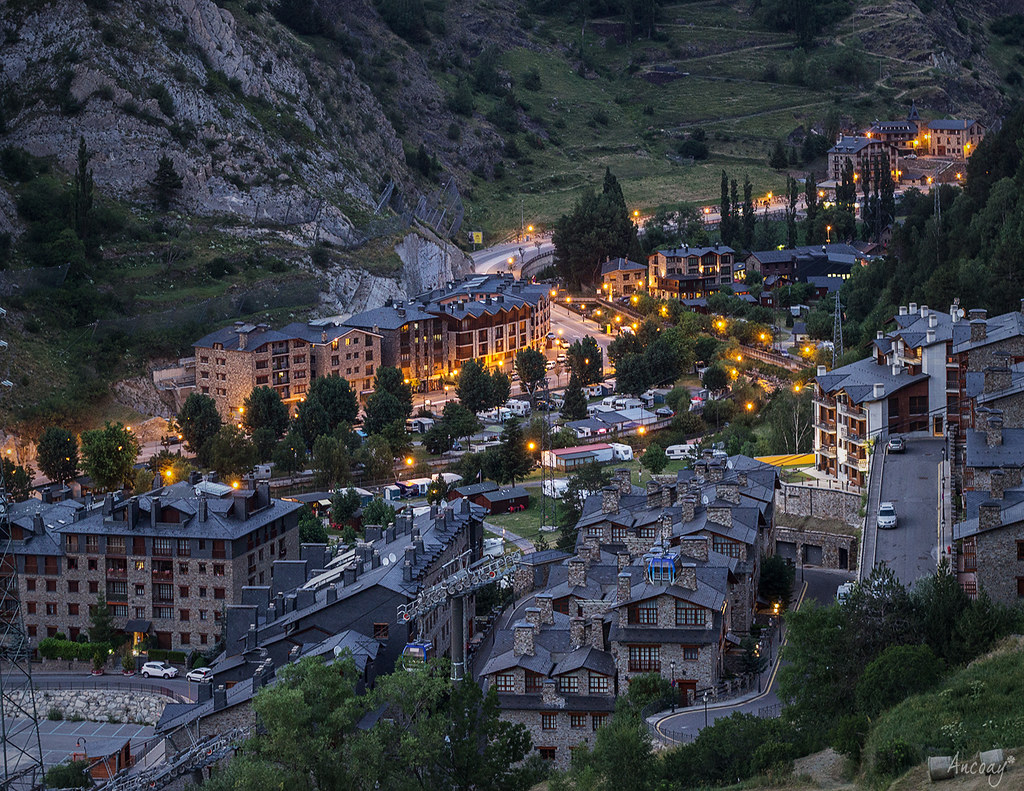
The parish of Canillo, one of seven administrative regions of Andorra, Photo: Wikimedia Commons (CC BY-SA 3.0)
When Andorra Makes Sense, and When It Doesn't
Andorra Is the Right Choice If:
You are a high-earning entrepreneur or professional who can genuinely relocate. The tax savings versus Spain or France can amount to hundreds of thousands of euros annually. At that level, even the passive residence investment threshold is justified within a single year.
You earn significant investment income, dividends, capital gains, interest, that would be heavily taxed in your current jurisdiction. Andorra's savings base treatment and exemptions for minority stakes make it exceptionally efficient for investors.
You run an international business that can be genuinely managed from Andorra. Digital businesses, consulting practices, IP licensing companies, and international trading operations are natural fits. The 10% corporate rate combined with zero dividend withholding creates a highly efficient structure.
You value quality of life alongside tax efficiency. Andorra is genuinely beautiful. The mountain lifestyle, the safety, the healthcare, the outdoor activities, these are not just selling points. They are reasons people stay long-term. I have clients who moved for the taxes and stayed for the life.
You hold significant intellectual property. The 2% effective rate under Andorra's Patent Box regime for qualifying IP income is one of the most competitive in Europe, better than Ireland's 6.25%, better than Luxembourg's 5.2%, and in a jurisdiction with no political controversy attached.
Andorra Is Not the Right Choice If:
You cannot genuinely relocate. Andorra's tax benefits require actual tax residency. If your life, family, and economic centre of gravity remain in France, Germany, or the UK, your home country tax authority will not accept an Andorran structure as changing your tax position. Substance is not optional, it is the foundation.
You are a US citizen or US resident. The United States taxes on citizenship, not residency. Moving to Andorra does not change your US federal tax obligations. The FATCA implications and reporting requirements add compliance complexity without equivalent benefit.
You need a broad EU treaty network. Andorra has tax treaties with France, Spain, Portugal, Luxembourg, Liechtenstein, the UAE, and a handful of others, growing but not comprehensive. If your business involves withholding tax exposure across many EU countries, the treaty gap creates real friction.
You require EU freedom of movement. Andorra is not in the EU or Schengen. As an Andorran resident, you have simplified access to France and Spain, but not automatic freedom of movement across all EU member states. For someone whose business requires frequent EU travel and work, this is a practical limitation.
Andorra vs Other European Jurisdictions
Andorra vs Monaco: Monaco offers 0% personal income tax, but property costs are 5 to 10 times higher, residency requires €500,000+ in bank deposits, and the lifestyle is urban rather than nature-oriented. For the right profile, Monaco wins on tax. For quality of life per euro spent, Andorra is more competitive than people realise.
Andorra vs Malta: Malta is EU member, Schengen, with 0–35% tax depending on domicile election. Malta's non-dom system can produce 0% on foreign income but requires careful structuring. Andorra is simpler and less dependent on complex tax elections. Malta has better EU market access.
Andorra vs Portugal NHR: Portugal's Non-Habitual Resident regime offered 10 years of reduced taxation on foreign income, but was reformed in 2024. For those who previously used NHR and need a new home, Andorra is one of the natural successor options.

Ordino village, one of Andorra's most preserved and picturesque parishes, Photo: Wikimedia Commons (CC BY-SA 3.0)
How 1Stop Connect Helps
I drove through Andorra as a teenager without stopping. Years later I understand exactly why people stop, and why they stay.
At 1Stop Connect, we help clients evaluate whether Andorra is the right jurisdiction for their specific situation, structure residency and company formation correctly, and connect them with the local legal, accounting, and banking professionals who make it work in practice.
🏆 Why 1Stop Connect for Andorra
We do not sell Andorra to everyone. We evaluate your specific situation honestly. If Andorra is not right for you, we tell you, and we recommend what is. If Andorra is right, we help you structure it correctly from the start.
Residency guidance. We work through your situation, income profile, family circumstances, travel patterns, existing tax obligations, and determine which residency category fits. Then we guide the application process from start to residency card.
Company formation. Foreign Investment Authorization, notarised articles, registration, tax setup, we coordinate the entire process with our local Andorran partners and keep you informed at every stage.
Banking introductions. We have established relationships with Andorran banking institutions and can facilitate introductions to the right institution for your profile. Coming through a known intermediary significantly improves the account-opening experience.
Cross-jurisdictional tax coordination. Andorra is only part of the picture. We work with tax advisors in your current jurisdiction to ensure the overall structure is coherent and defensible. Moving residency without coordinating your exit from your home country's tax system is one of the most common and costly mistakes we see.
Ongoing compliance. Annual accounts, renewals, corporate administration, we manage the paperwork so you focus on your business.
This article provides educational information about Andorra's tax and residency framework based on regulations as of April 2026. It is not legal advice. It is not tax advice. It is not a substitute for professional consultation.
Tax laws, residency investment thresholds, and compliance requirements change. The January 2026 legal changes significantly altered passive residency requirements and AFA deposit rules, always verify current thresholds before making any decision. Laws continue to evolve as Andorra balances its attractiveness as a jurisdiction with international transparency obligations.
Before making any structural or residency decision, consult with licensed legal and tax professionals familiar with both Andorra and your home jurisdiction. 1Stop Connect provides company formation and coordination services and can connect you with appropriate advisors.
If you would like to discuss your specific situation, contact us directly. That is exactly what we are here for.