Why "Jungle"? Because It Actually Is One
Let me be honest with you. Setting up a company in the UAE is not straightforward. It is not simple. And it is definitely not a one size fits all situation.
You have mainland companies. You have free zone companies. You have offshore companies. Within free zones, you have different designations. Within mainland, you have variations. Each structure has different rules about trading, different tax treatment, different visa allocations, different licensing requirements.
This is not regulatory complexity for the sake of bureaucracy. This is actually strategic design. The UAE has created a ecosystem where different business models fit different legal structures. Want to trade in the UAE market? You need one structure. Want to operate internationally from Dubai? Different structure. Want to hold assets without physical operations? Yet another structure.
The jungle metaphor is accurate because you need a guide. You need to understand the terrain. And you need to know which path leads where before you start walking.
This article is that guide. We are going to walk through every single entity type available in the UAE, explain what each one actually means, analyze liability protection, and compare them to international standards. By the end, you will know exactly which structure fits your business.
- The Big Picture: All 8 Entity Types at a Glance
- Structure #1: Mainland LLC
- Structure #2: LLC SO (Single Owner)
- Structure #3: Free Zone LLC
- Structure #4: FZCO (Free Zone Company)
- Structure #5: FZE (Free Zone Establishment)
- Structure #6: Offshore LTD
- Structures #7 & #8: Offshore Variations
- Liability Comparison: All Structures
- International Comparison
- Which Structure for Which Business?
- Why This Matters for 1Stop Connect
The Big Picture: All 8 Entity Types at a Glance
Before we dive deep into each structure, you need the overview. Here are the eight distinct company types you can form in the UAE:
Mainland Structures
- LLC (Limited Liability Company) - The traditional mainland business entity
- LLC SO (Single Owner LLC) - Same as LLC but for one shareholder only
Free Zone Structures
- Free Zone LLC - Limited liability company within a designated free zone
- FZCO (Free Zone Company) - Essentially the same as Free Zone LLC, designation varies by zone
- FZE (Free Zone Establishment) - Single owner free zone entity
Offshore Structures
- Offshore LTD (Limited Company) - Registered in offshore jurisdictions like RAK
- Offshore INC/LLC - Naming variations of offshore entities
- Offshore ICC (International Corporate Centre) - Specific RAK offshore designation
Each of these has distinct characteristics. Each serves different purposes. And critically, each has different liability implications, which we will analyze in detail.
If you are setting up a physical business that will operate in Dubai or Abu Dhabi, selling to local customers, you are looking at Mainland structures. If you are running an online business, consulting internationally, or want tax efficiency, you are probably looking at Free Zone structures. If you are holding assets, managing IP, or need an international invoicing vehicle without UAE operations, you are looking at Offshore structures.
Structure #1: Mainland LLC (Limited Liability Company)

What It Actually Is
A Mainland LLC is a limited liability company registered with the Department of Economic Development (DED) in Dubai, or the equivalent authority in other emirates (Abu Dhabi DED, Sharjah Economic Development, etc.).
This is the traditional business structure. The one that existed before free zones became popular. The one that gives you full access to the UAE market without restrictions.
Key Characteristics
Foreign Ownership: Since 2021, the UAE allows 100% foreign ownership of mainland companies in most sectors. Previously, you needed a 51% UAE national partner. That requirement is gone for most business activities, though certain strategic sectors still require local partnership.
Trading Rights: Full mainland trading rights. You can sell to anyone, anywhere in the UAE. You can have a physical shop in a Dubai mall. You can bid on government contracts. You can operate retail locations. No restrictions on where your customers are located.
Physical Presence: You need a physical office or commercial space in the emirate where you are licensed. This can be a serviced office, a flexi desk, or a dedicated premises, but you must have registered commercial space.
Licensing: Requires a mainland trade license issued by DED or local authority. License types include commercial (trading), professional (services), industrial (manufacturing), and tourism.
Liability Protection
This is where it gets important. The LLC designation means limited liability. Here is what that actually protects:
Shareholder Liability: Limited to the amount of capital contributed. If you own 50% of a company with AED 300,000 capital, your maximum exposure is AED 150,000. Creditors cannot pursue your personal assets beyond your shareholding.
Director Liability: Directors have fiduciary duties but are not personally liable for company debts unless there is fraud, negligence, or breach of duty. Personal guarantees (common for bank loans or large supplier contracts) create separate personal liability beyond the LLC structure.
What Limited Liability Does NOT Protect: Tax liabilities where directors can be held personally responsible. Criminal liability (fraud, money laundering, etc.). Violations of labor law. Personal guarantees you sign separately. Tortious acts committed personally.
The legal framework is governed by Federal Decree Law No. 32 of 2021 on Commercial Companies, which codifies limited liability protection and shareholder rights.
When to Choose Mainland LLC
- You are operating a retail business selling to UAE consumers
- You need to bid on government or semi government contracts
- Your business model requires physical presence across the UAE
- You are opening restaurants, shops, clinics, or service centers for local market
- You want maximum flexibility without free zone restrictions
You are opening a chain of coffee shops in Dubai. You need locations in malls and on the street. Your customers are local residents and tourists. You cannot operate this from a free zone because free zones restrict mainland trading. You need a Mainland LLC with a commercial license. This gives you full access to lease retail space anywhere in Dubai, obtain municipality approvals, and operate without geographic restrictions.
Structure #2: LLC SO (Limited Liability Company, Single Owner)
What Makes It Different
LLC SO is essentially identical to a regular Mainland LLC with one critical difference: it has only one shareholder.
Before 2020, UAE law required minimum two shareholders for any LLC. You could not be a sole shareholder. This created the absurd situation where people would bring in family members or friends as token 1% shareholders just to meet the legal requirement.
The 2020 commercial companies law reform introduced the LLC SO structure, allowing true single owner companies.
Characteristics
Ownership: 100% owned by one individual or one corporate entity. No need for additional shareholders.
Governance: Simplified decision making. No shareholder meetings required (you are the only shareholder). No shareholder resolutions needed for routine decisions. Sole owner acts as decision maker.
Liability: Identical to regular LLC. Limited liability protection applies. The sole owner is liable only to the extent of capital contribution.
Everything Else: Same licensing requirements, same trading rights, same physical office requirements, same tax treatment as regular Mainland LLC.
When to Choose LLC SO
- You are a sole entrepreneur who wants to maintain 100% ownership
- You do not have business partners and do not want token shareholders
- You want simplified governance without shareholder complications
- Your business model fits Mainland (needs full UAE market access)
The choice between LLC and LLC SO is purely about ownership structure. If you are solo, go LLC SO. If you have genuine business partners, go LLC. Functionally, they are the same in terms of liability and operations.
Structure #3: Free Zone LLC
What Free Zones Actually Are
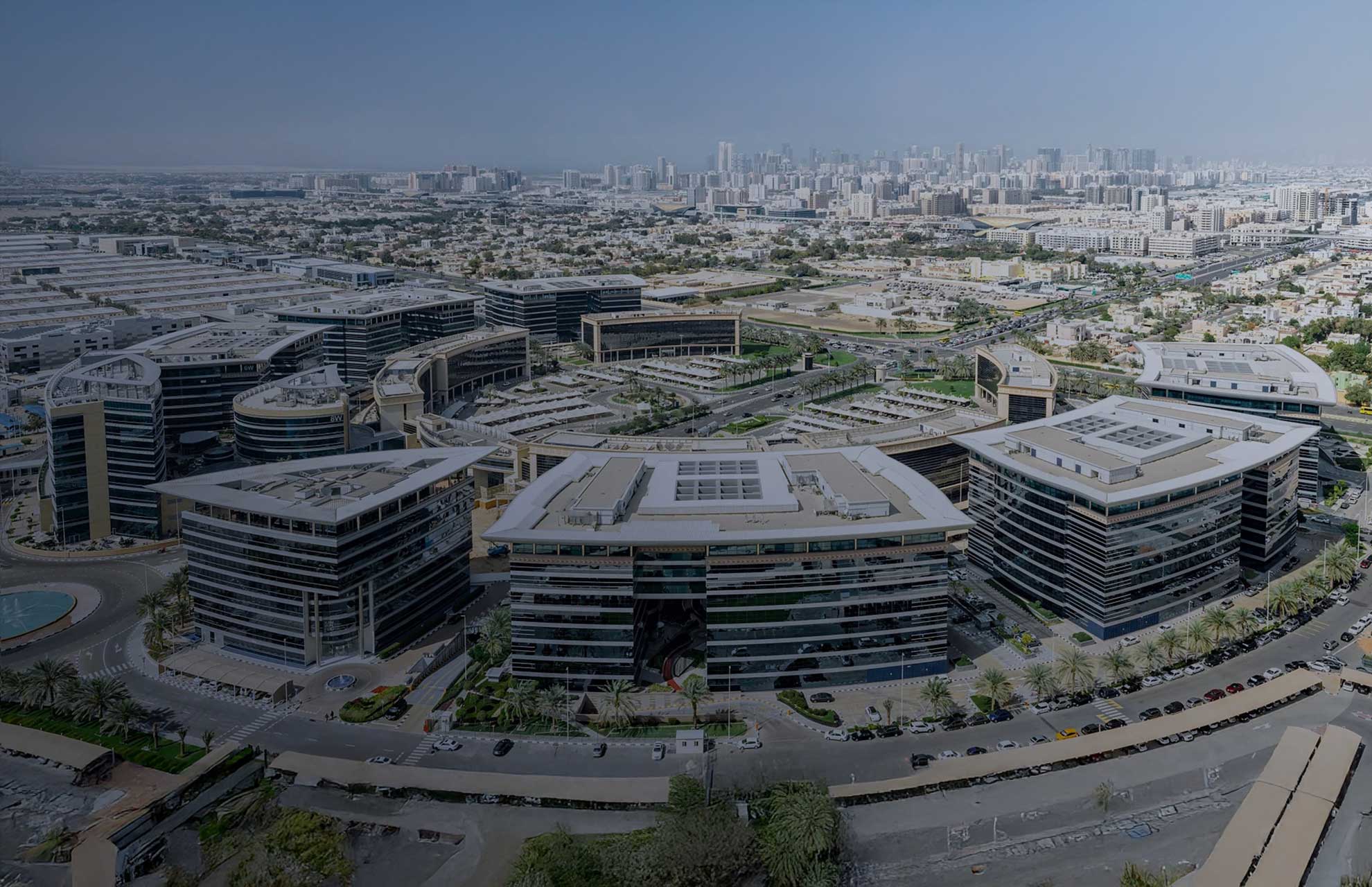
Free zones are designated economic zones with their own regulatory frameworks. Think of them as special jurisdictions within the UAE that operate under different rules than the mainland.
There are over 40 free zones in the UAE. Each has its own authority, its own licensing rules, and its own permitted activities. For comprehensive information about specific free zones, their specializations, costs, and benefits, see our detailed guide: The UAE Formation Universe.
Free Zone LLC Characteristics
Foreign Ownership: 100% foreign ownership has always been allowed in free zones. This was the original appeal before mainland opened up.
Trading Restrictions: This is the critical limitation. Free zone companies can operate within their free zone, export internationally, or trade with other free zones. They cannot trade directly in the UAE mainland market without appointing a local distributor or agent.
What this means practically: If you run a consulting firm from DMCC and your clients are in the UK, Europe, Asia - no problem. If your clients are UAE mainland companies, technically you should invoice through a mainland distributor (though enforcement varies). If you want to open a shop in Dubai Mall, you cannot do it with a free zone company. You need mainland.
Physical Presence: You need an office or desk space within the free zone. Each free zone has different office requirements. Some allow flexi desks (shared workspace with your company name). Some require dedicated offices. DMCC, for example, offers flexi desk options starting around AED 10,000 annually.
Licensing: Issued by the free zone authority itself, not DED. License types vary by zone. General trading license, service license, e-commerce license, etc.
Liability Protection
Free Zone LLCs provide the same limited liability protection as Mainland LLCs. Shareholders are liable only to their capital contribution. Creditors cannot pursue personal assets beyond shareholding.
The legal framework is governed by the specific free zone's regulations. DMCC has its own companies regulations. JAFZA has its own. But all follow the limited liability principle.
For detailed information about free zone tax treatment, substance requirements, and specific zone benefits, refer to our comprehensive guide: The UAE Formation Universe.
When to Choose Free Zone LLC
- Your business operates internationally, not focused on UAE market
- You run an online business, SaaS, consulting, or remote services
- You do not need to trade directly in UAE mainland
- You want streamlined setup (free zones are generally faster than mainland)
Many free zone companies do business with UAE mainland clients anyway. How? Officially, you should appoint a local distributor and invoice through them. Practically, many free zone companies invoice UAE clients directly, especially for services. Enforcement is inconsistent. The Federal Tax Authority has clarified that providing services to mainland clients does not necessarily violate free zone restrictions if the service is delivered from the free zone. But there is gray area here. If mainland trading is core to your model, go mainland. If it is occasional, free zone usually works.
Structure #4: FZCO (Free Zone Company)
What Is The Difference Between Free Zone LLC and FZCO?
Honest answer: not much. Both are free zone entities. Both provide limited liability. Both operate under free zone rules.
The difference is mostly nomenclature and shareholder count:
FZCO typically designates a free zone company with 1 to 50 shareholders. The "CO" suggests "company" with multiple shareholders, though technically one shareholder FZCOs exist.
Free Zone LLC is the generic term for limited liability company in a free zone.
Some free zones use FZCO designation. Some use Free Zone LLC. DMCC uses both terms somewhat interchangeably. JAFZA tends to use JAFZA company. It is branding more than legal substance.
Characteristics
Identical to Free Zone LLC:
- 100% foreign ownership
- Limited liability protection
- Same trading restrictions (free zone and export, not mainland direct)
- Same tax treatment (0% if substance requirements met)
- Requires free zone office or flexi desk
- Governed by free zone authority regulations
When people say FZCO, they usually mean a DMCC or similar free zone company. The legal substance is the same as any free zone LLC.
Structure #5: FZE (Free Zone Establishment)
The Single Owner Free Zone Entity
FZE is to free zones what LLC SO is to mainland. It is a free zone company with exactly one shareholder.
Characteristics
Ownership: Single shareholder only. Can be an individual or a corporate entity, but only one.
Governance: Streamlined. No shareholder meetings. Sole owner makes all decisions.
Liability: Limited. Same as FZCO or Free Zone LLC. Shareholder liable only to capital contribution.
Everything Else: Same trading restrictions, same tax treatment, same physical office requirements as FZCO.
When to Choose FZE vs FZCO
If you are a solo entrepreneur setting up in a free zone, you will likely form an FZE. If you have business partners, you will form a FZCO. It is that simple.
Some people prefer FZE even when solo because it is clearer in corporate structure. No ambiguity about shareholder control. You are the sole owner. Period.
Structure #6: Offshore LTD (Limited Company)
What Offshore Actually Means in UAE Context
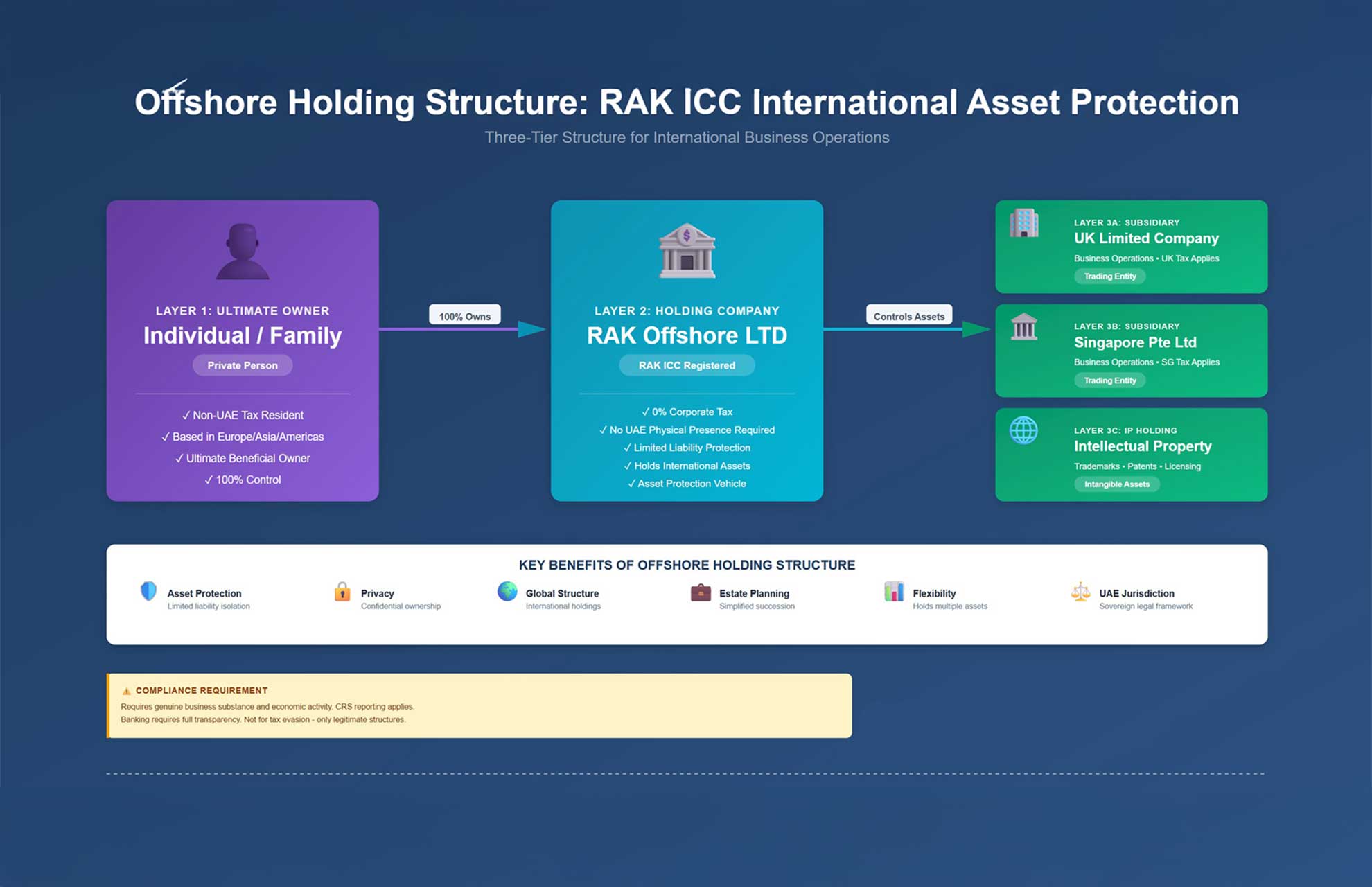
When people say "UAE offshore company," they usually mean a company registered in RAK ICC (Ras Al Khaimah International Corporate Centre) or similar offshore jurisdiction within UAE.
These are not UAE operating companies. They are international holding or invoicing vehicles registered in UAE jurisdiction but prohibited from conducting business within the UAE.
Key Characteristics
No Physical Presence in UAE: Offshore companies cannot have physical office in UAE. They cannot operate from UAE. They are registered entities only.
Cannot Trade in UAE: Prohibited from conducting any commercial activity within UAE territory. Cannot sell to UAE customers. Cannot provide services to UAE market. Cannot own UAE real estate (with certain exceptions in specific emirates).
What They CAN Do: Hold assets internationally. Own shares in other companies. Invoice international clients from the UAE registered entity. Manage intellectual property. Act as holding companies for international structures.
Bank Accounts: Getting bank accounts for offshore companies has become significantly harder. UAE banks generally do not open accounts for RAK offshore companies anymore. You need to look at international banks, which requires substance and proper documentation.
Substance Requirements: To avoid being classified as tax evasion vehicles, offshore companies need economic substance if they have relevant income. This means actual business activity, not just a registered shell.
Liability Protection
Offshore LTDs provide limited liability. Shareholders are liable only to their shareholding. Creditors cannot pursue personal assets.
However, the practical asset protection value of UAE offshore companies has diminished. With Common Reporting Standard (CRS), information exchange, and substance requirements, these are not the secret structures they once were.
When to Use Offshore LTD
- Holding company for international assets
- Intellectual property management
- International invoicing structure (where clients prefer UAE entity over Seychelles/BVI)
- Intermediary in corporate structures
- You have genuine substance and are not using it to avoid legitimate taxes
The biggest challenge with UAE offshore companies today is banking. UAE banks largely stopped opening accounts for RAK offshore companies. International banks want to see substance, real business activity, and proper documentation. If your business model requires active banking, offshore may not be practical. Free zone companies have much easier banking access. This is the practical limitation that kills many offshore structures before they start.
Structures #7 & #8: Offshore INC, LLC, and ICC Variations
Naming Variations, Same Legal Structure
RAK ICC allows you to register your offshore company with different designations:
- Offshore LTD (Limited Company) - Standard designation
- Offshore INC (Incorporated) - American style designation
- Offshore LLC (Limited Liability Company) - Another variation
- ICC (International Corporate Centre) - Specific RAK designation
These are naming preferences, not different legal structures. They all operate under RAK offshore company law. They all provide limited liability. They all have the same restrictions on UAE operations. They all face the same banking challenges.
Some people choose INC because it sounds more American and clients are familiar with the designation. Some choose LLC for the same reason. LTD is the most common internationally. The legal substance is identical.
Liability Comparison: All Structures Side by Side
Now that we have covered all eight structures, let us compare liability protection clearly:
| Entity Type | Limited Liability? | Shareholder Exposure | Director Personal Risk | Creditor Rights |
|---|---|---|---|---|
| Mainland LLC | Yes | Limited to capital contribution | Protected unless fraud/negligence | Can sue in UAE courts |
| LLC SO | Yes | Limited to capital contribution | Protected unless fraud/negligence | Can sue in UAE courts |
| Free Zone LLC | Yes | Limited to capital contribution | Protected unless fraud/negligence | Free zone authority + UAE courts |
| FZCO | Yes | Limited to capital contribution | Protected unless fraud/negligence | Free zone authority + UAE courts |
| FZE | Yes | Limited to capital contribution | Protected unless fraud/negligence | Free zone authority + UAE courts |
| Offshore LTD | Yes | Limited to capital contribution | Protected (no UAE operations anyway) | RAK courts, limited UAE recourse |
| Offshore INC/LLC | Yes | Limited to capital contribution | Protected (no UAE operations anyway) | RAK courts, limited UAE recourse |
| Offshore ICC | Yes | Limited to capital contribution | Protected (no UAE operations anyway) | RAK courts, limited UAE recourse |
What Limited Liability Actually Protects
Across all structures, limited liability means:
Your personal assets are protected from company creditors. If the company owes money and cannot pay, creditors can seize company assets. They cannot seize your personal house, car, or savings (beyond your shareholding in the company).
Your exposure is capped at your investment. If you invested AED 100,000 in share capital, your maximum loss is AED 100,000. You cannot lose more than you put in (unless you sign personal guarantees).
Business debts stay with the business. The company is a separate legal person. Its debts are its debts, not yours personally.
What Limited Liability Does NOT Protect
Personal guarantees override limited liability. If you sign a personal guarantee for a bank loan, you are personally liable for that loan regardless of company structure.
Fraud and criminal acts are not protected. Limited liability applies to legitimate business debts. It does not protect you if you commit fraud, embezzlement, or criminal acts through the company.
Certain regulatory liabilities pierce the veil. Tax authorities in most jurisdictions can hold directors personally liable for unpaid taxes. Labor violations can result in personal liability. Environmental damage in some cases can pierce corporate veil.
Veil piercing in case of abuse. If courts determine the company is a sham, used to defraud creditors, or improperly capitalized with no real separation between personal and corporate assets, they can pierce the corporate veil and hold shareholders personally liable.
Limited liability is powerful protection. But it is not absolute. It protects legitimate business operations. It does not protect fraud, personal guarantees, or regulatory violations.
International Comparison: How UAE Structures Stack Up

How do UAE structures compare to international standards? Let us look at equivalents:
Mainland LLC vs International Structures
Similar to: US LLC, UK Limited Company (Ltd), Singapore Private Limited (Pte Ltd), German GmbH
Liability: All provide limited liability protection to shareholders. Mechanism is similar across jurisdictions.
Governance: UAE mainland companies tend to have simpler governance than US or UK equivalents. Less regulatory filing. Simpler reporting requirements. But also less established case law and fewer investor protections in disputes.
Foreign Ownership: UAE now allows 100% foreign ownership like Singapore or UK. US LLCs always allowed foreign ownership. Germany still restricts certain sectors.
Free Zone Structures vs International Equivalents
Similar to: Hong Kong Limited Company, Singapore structures in certain sectors, special economic zone entities globally
Key Similarity: Designed to attract international business with streamlined setup and favorable business environment.
Key Difference: Mainland trading restrictions. Hong Kong companies can operate freely in Hong Kong. Singapore companies operate freely in Singapore. UAE free zone companies face restrictions on UAE mainland trading. This is unique to UAE free zone model.
Banking and Credibility: Hong Kong and Singapore companies have stronger international banking access and credibility. UAE free zone companies are gaining acceptance but still face skepticism in some jurisdictions.
Offshore Structures vs International Equivalents
Similar to: BVI companies, Seychelles IBCs, Cayman exempted companies
Functionality: All are used for holding, IP management, international invoicing. All face banking challenges. All require economic substance to be legitimate.
UAE Advantage: RAK offshore companies have UAE sovereign backing. This can be seen as more credible than pure offshore jurisdictions, though practically the difference is shrinking.
Banking Reality: Both UAE offshore and traditional offshore (BVI, Seychelles) face similar banking challenges. International banks want substance either way. The jurisdiction logo on the incorporation certificate matters less than actual business substance.
Across all jurisdictions - UAE, Singapore, Hong Kong, BVI, Seychelles - the game has changed. Substance is everything now. You cannot just register a company and expect it to work. You need real business activity. Real employees or contractors. Real expenditure. Real decision making in the jurisdiction. The corporate structure is the vehicle, but substance is the engine. Without substance, the structure is worthless.
Which Structure for Which Business? Practical Decision Guide
After all this analysis, how do you actually choose? Here is the decision framework:
Choose Mainland LLC If:
- You are selling physical products in UAE market (retail, wholesale, distribution)
- You are opening physical locations (shops, restaurants, clinics, gyms)
- You need to bid on government or institutional contracts
- Your primary market is UAE residents and businesses
- You want maximum operational flexibility
Choose Free Zone (LLC, FZCO, or FZE) If:
- Your business operates internationally, not focused on UAE market
- You run online services, SaaS, e-commerce, consulting, or professional services
- You want 0% corporate tax and can meet substance requirements
- You do not need direct mainland trading rights
- You want faster setup and streamlined licensing
Choose Offshore (LTD, INC, LLC) If:
- You need a holding company for international investments
- You are managing intellectual property
- You need an invoicing entity for international clients (and can secure banking)
- You are building a corporate structure with multiple layers
- You have substance and this is genuine business, not tax avoidance
Specific Business Scenarios
E-commerce business shipping products internationally: Free zone. DMCC or JAFZA. E-commerce license. Warehouse in free zone or use third party logistics. No mainland trading needed.
Consulting firm with international clients: Free zone. DMCC or IFZA. Service license. Operate from flexi desk or small office. 0% tax if substance met.
Real estate trading in Dubai: Mainland. Need mainland license to trade UAE property. Free zone does not work.
Software development company serving global clients: Free zone. Dubai Silicon Oasis or DMCC. Tech friendly environment. 0% tax. International operations.
Import/export trading company: Depends. If trading within UAE mainland, need mainland. If pure import/export (into UAE and out, or third country trade), free zone works. JAFZA is specifically designed for this.
Holding company for European subsidiaries: Offshore or free zone depending on banking requirements. If you can secure banking, offshore works. If banking is critical, free zone is more practical.
Why This Matters for 1Stop Connect Clients
We have been navigating this jungle since 2018. We have formed thousands of UAE entities across every structure type. We know which free zones approve which activities faster. We know which banks will consider which structures. We know the practical reality beyond the legal theory.
When you work with 1Stop Connect, we do not just file paperwork. We analyze your actual business model, your target market, your operational requirements, and your long term strategy. Then we recommend the structure that fits.
Sometimes that is mainland even though free zone is cheaper, because mainland is what the business actually needs. Sometimes it is free zone even though the client initially wanted mainland, because we can see the tax and operational benefits. Sometimes it is a combination - mainland for local operations, free zone for international arm.
The jungle is navigable. But you need a guide who knows the terrain.
Structure Selection: We analyze your business and recommend the optimal entity type.
Licensing: We handle all licensing applications, authority approvals, and documentation.
Visa Processing: We secure investor visas, employee visas, and dependent visas as needed.
Banking Introductions: We introduce you to banks that work with your structure type and can facilitate account opening (though final approval is always the bank's decision).
Office Solutions: We arrange physical office space, flexi desks, or virtual offices depending on requirements.
Ongoing Compliance: We handle annual renewals, regulatory filings, and keep you compliant with changing regulations.
This is not just formation services. This is partnership in building your UAE presence correctly from the start.
This article provides educational information about UAE company structures based on regulations as of March 2026. It is not legal advice. It is not tax advice. It is not a substitute for professional consultation.
Company formation laws, tax regulations, and substance requirements change. What is accurate today may change tomorrow. Licensing requirements vary by emirate and specific business activity. Banking policies change frequently.
Before forming any company structure, consult with licensed legal and tax professionals familiar with your specific situation. 1Stop Connect provides company formation services and can connect you with appropriate legal and tax advisors as needed.
The information here is accurate to our knowledge as of publication but carries no warranty. Laws change. Regulations evolve. Always verify current requirements before proceeding.
If you would like to discuss your specific situation, contact us directly. That is exactly what we are here for.